
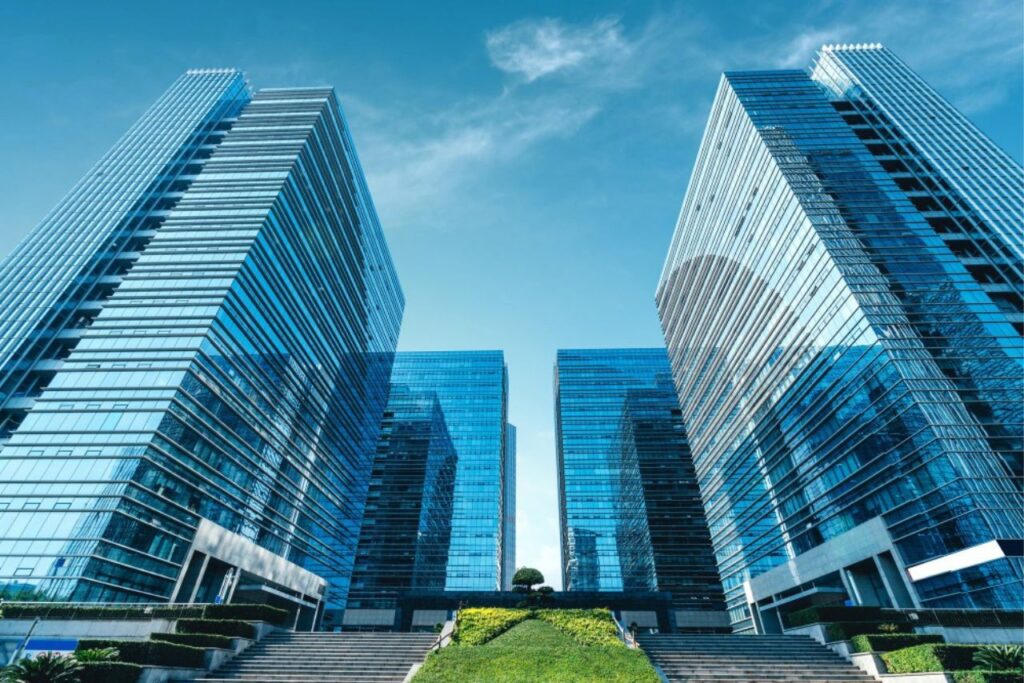
Discover how GCC growth in Bengaluru, Hyderabad & Pune will boost India’s commercial real estate market by 2030 with rising office space demand.
Global Capability Centres (GCCs) are emerging as one of the strongest growth engines for India’s commercial real estate sector. As multinational companies scale their GCC operations, cities like Bengaluru, Hyderabad and Pune are witnessing sustained demand for Grade-A office spaces, large floor-plate campuses and technology-ready commercial developments also creating many Hyderabad GCC jobs.
By 2030, GCC-led office leasing is expected to account for a significant share of total commercial absorption, positioning these three cities as long-term commercial real estate hotspots in India.
GCC Growth Driving Office Space Demand
GCCs have evolved beyond back-office functions into strategic hubs for engineering, product development, data analytics, AI, BFSI operations and global decision-making. This shift is directly translating into higher demand for premium commercial real estate.
Key demand drivers include:
Large, scalable office campuses to support long-term GCC expansion
Preference for Grade-A office buildings with modern infrastructure and sustainability features
Strong appetite for office spaces in established and emerging tech corridors
GCCs are projected to contribute a substantial portion of new office leasing activity across Bengaluru, Hyderabad and Pune, supporting rental growth and improved asset valuations.
Why Bengaluru, Hyderabad and Pune Lead the GCC Office Market
Bengaluru continues to dominate as India’s largest technology and innovation hub, attracting global GCCs focused on deep tech, R&D and product engineering. Its mature ecosystem and skilled talent pool keep office absorption levels consistently high.
Hyderabad has rapidly emerged as a preferred GCC destination due to pro-business policies, robust infrastructure, availability of large contiguous office spaces and strong talent availability. The city is increasingly attracting GCCs in cloud, fintech, life sciences and enterprise technology.
Pune benefits from a diversified economy spanning IT, engineering, BFSI and manufacturing-linked services. Competitive costs, strong educational institutions and a growing professional workforce make Pune a strategic GCC location with rising commercial real estate demand.
Together, these cities are driving a structural shift in India’s office market, moving towards larger, long-term, high-quality commercial developments.
What This Means for Investors and Businesses
For investors, GCC expansion creates long-term visibility on office demand, stable leasing cycles and rental growth in prime micro-markets. For developers, the focus is shifting toward building future-ready commercial assets aligned with GCC requirements.
For corporates and occupiers, the availability of world-class commercial infrastructure in Bengaluru, Hyderabad and Pune supports business continuity, global collaboration and scalable growth.
As India strengthens its position as a global GCC hub, commercial real estate in these cities is well-positioned to reach new highs by 2030.
For more latest updates on GCCs in Hyderabad, visit Hyderabad news and stay informed with everything happening in and around the city.